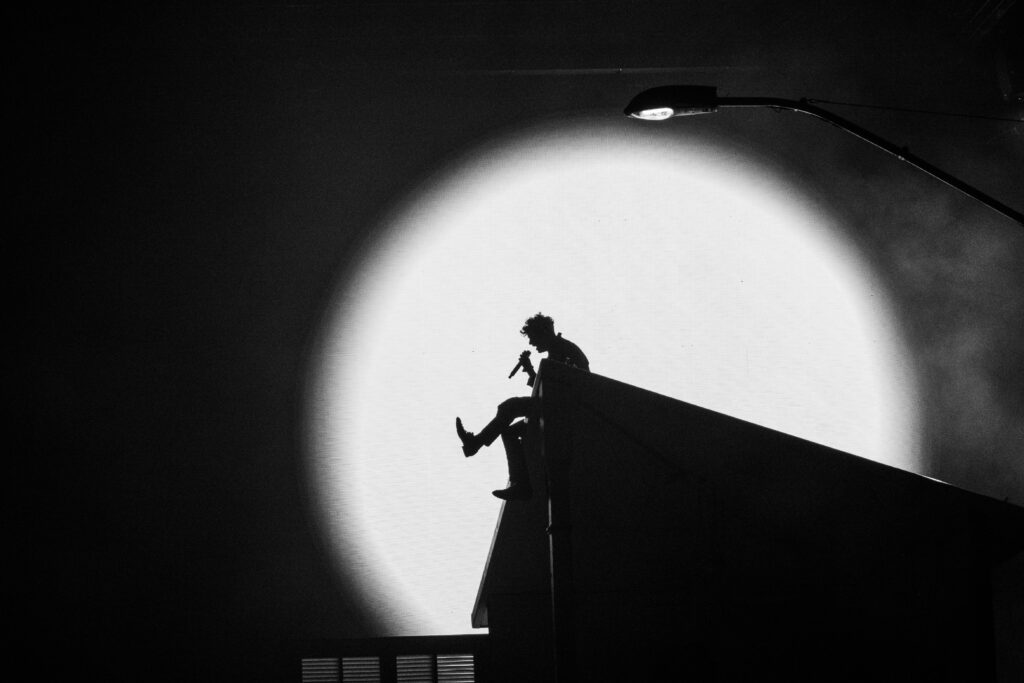
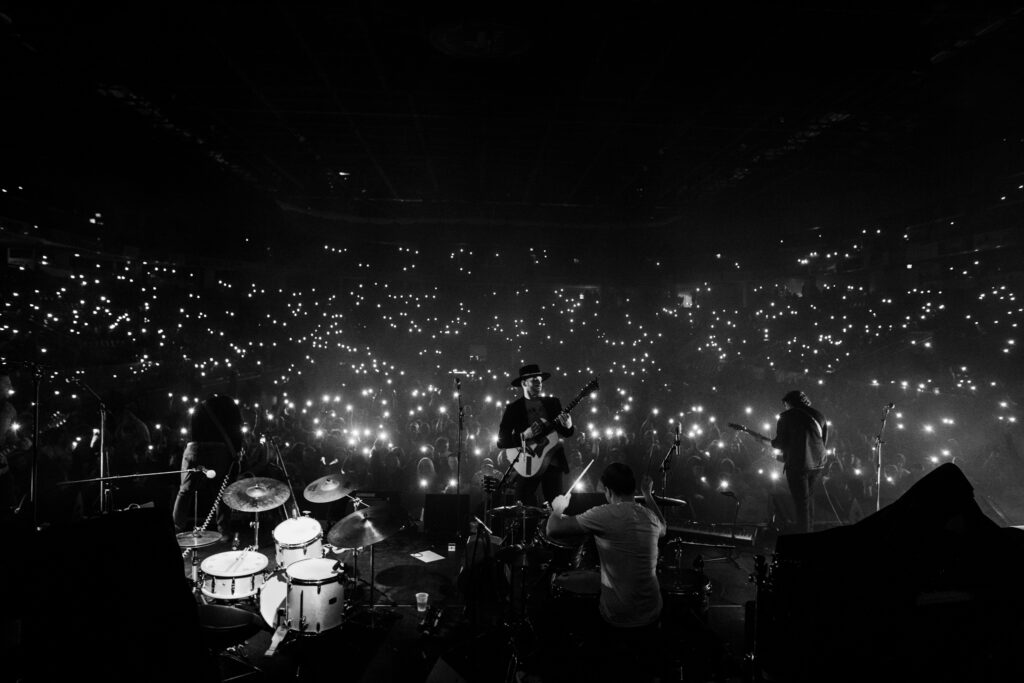
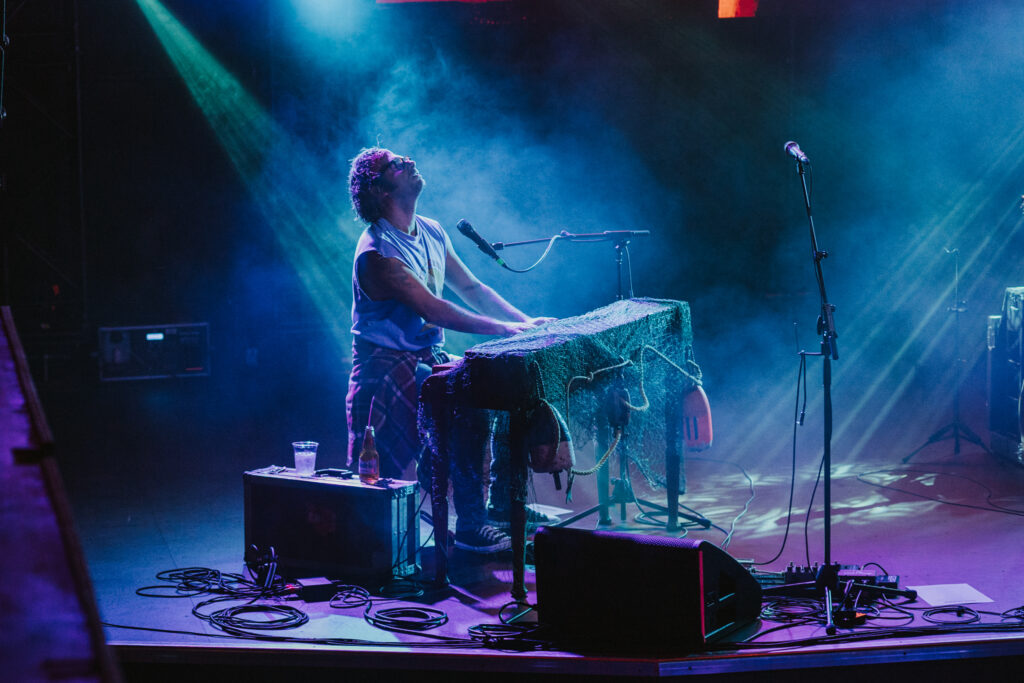
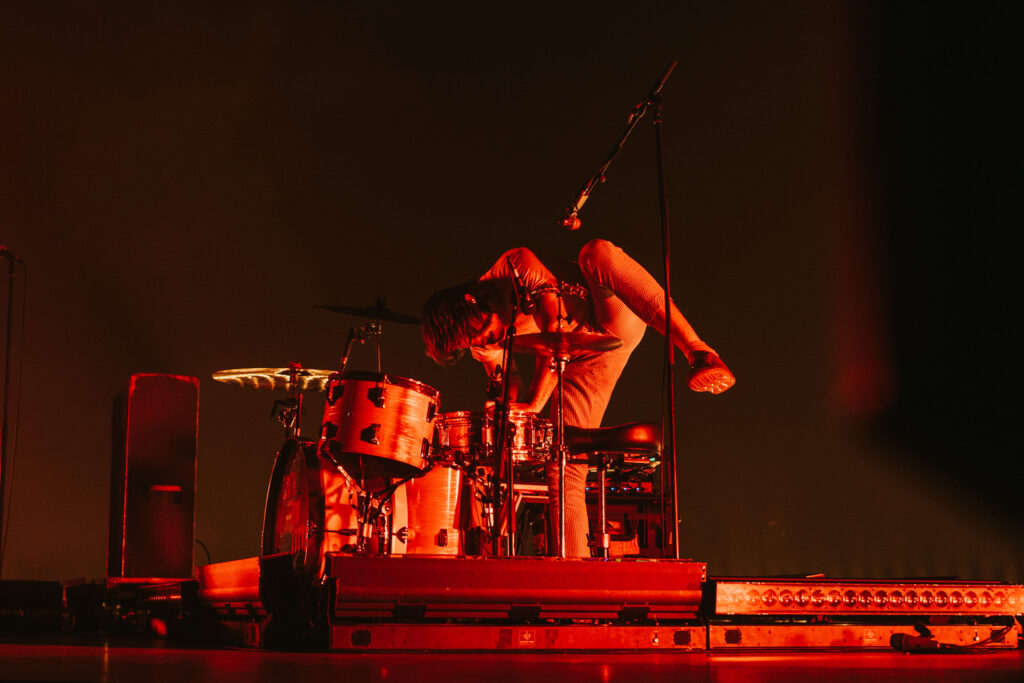
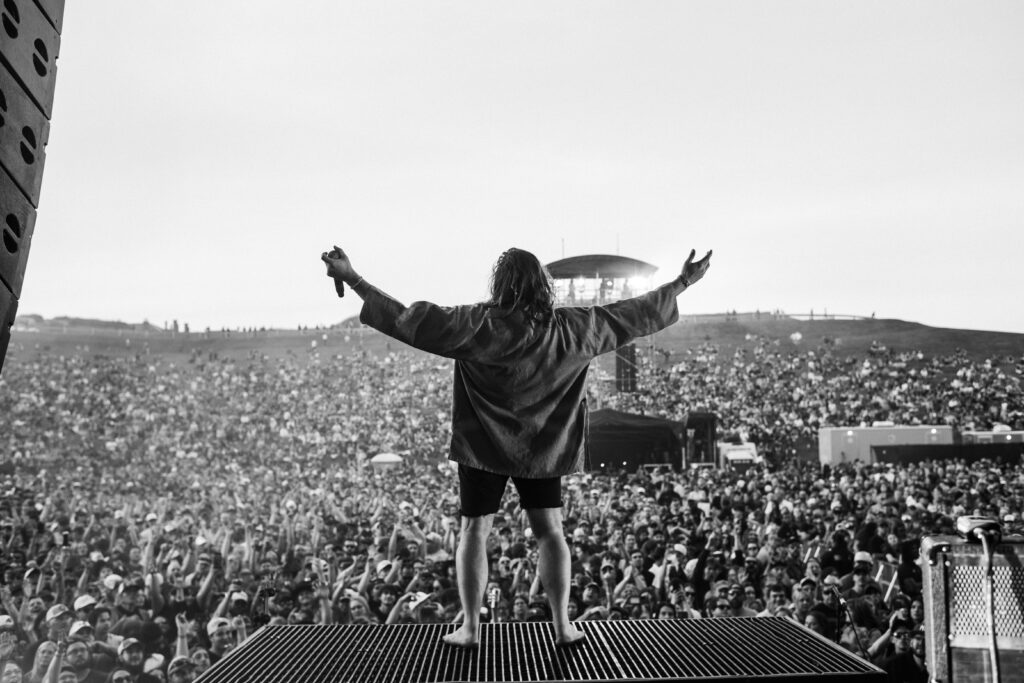
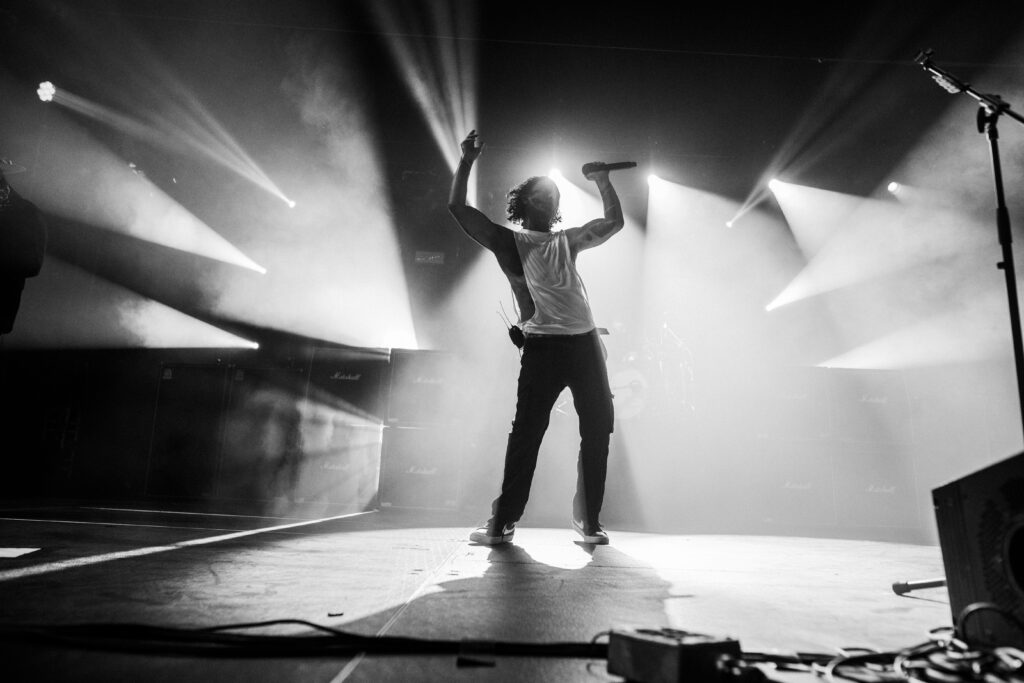
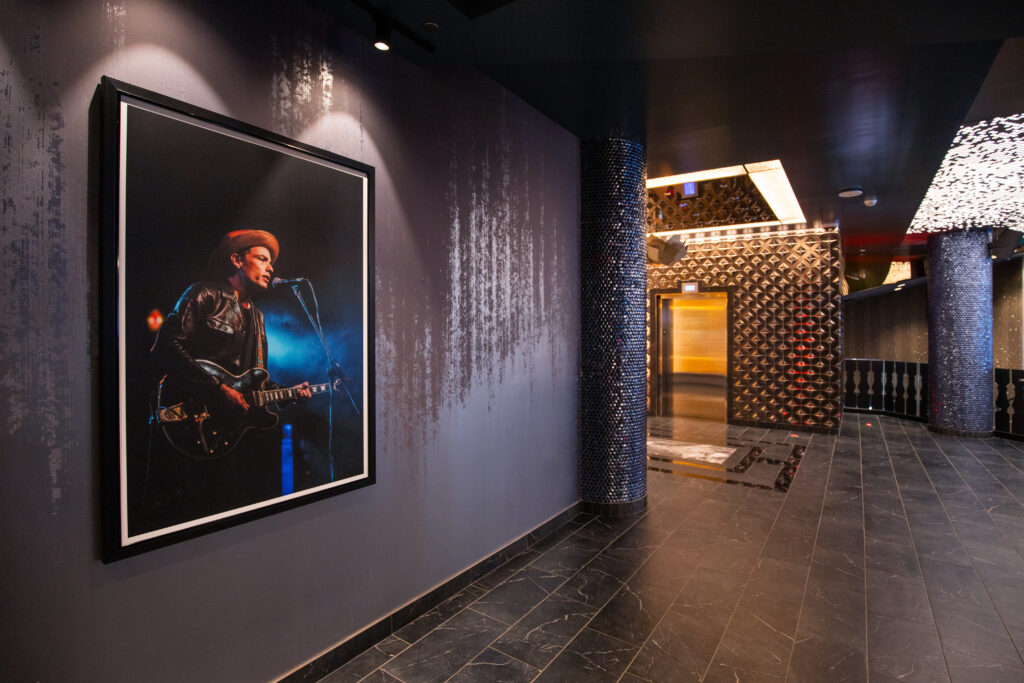
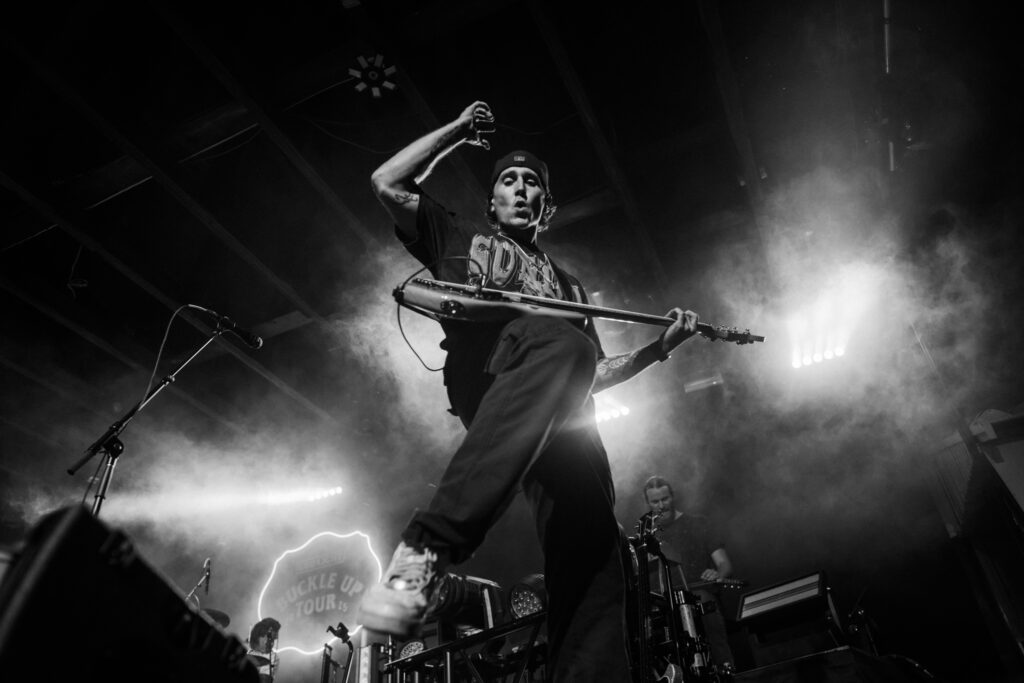
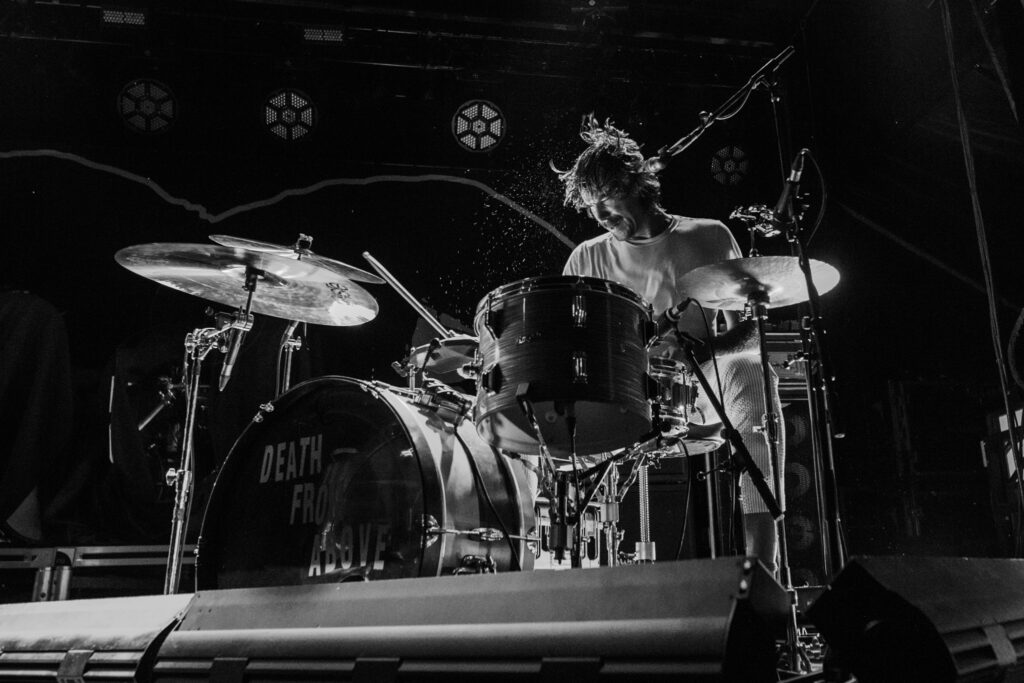
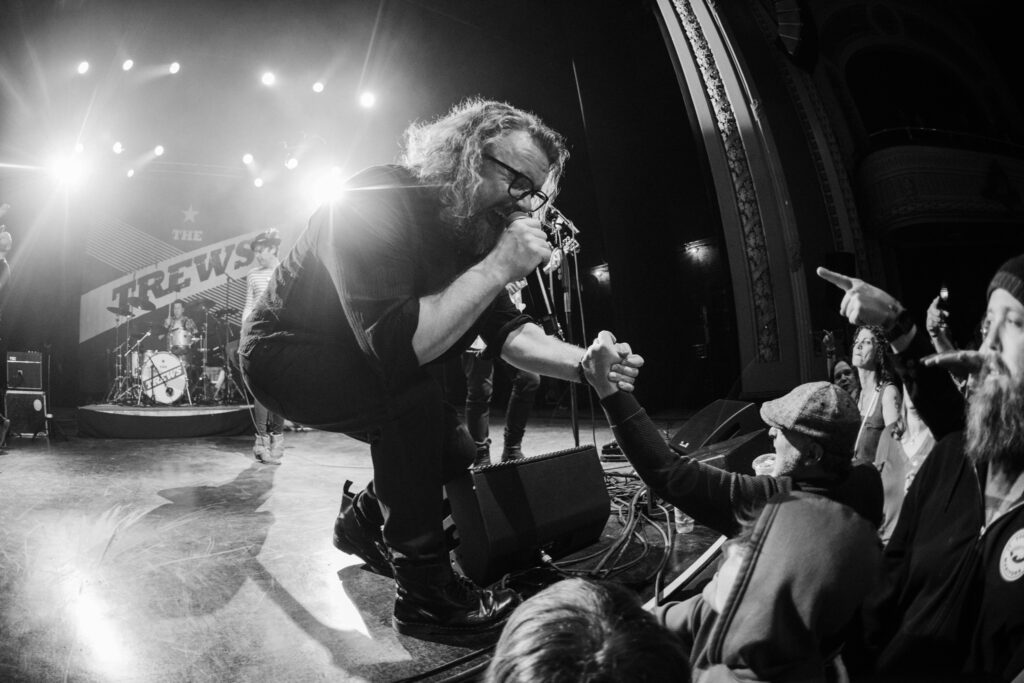
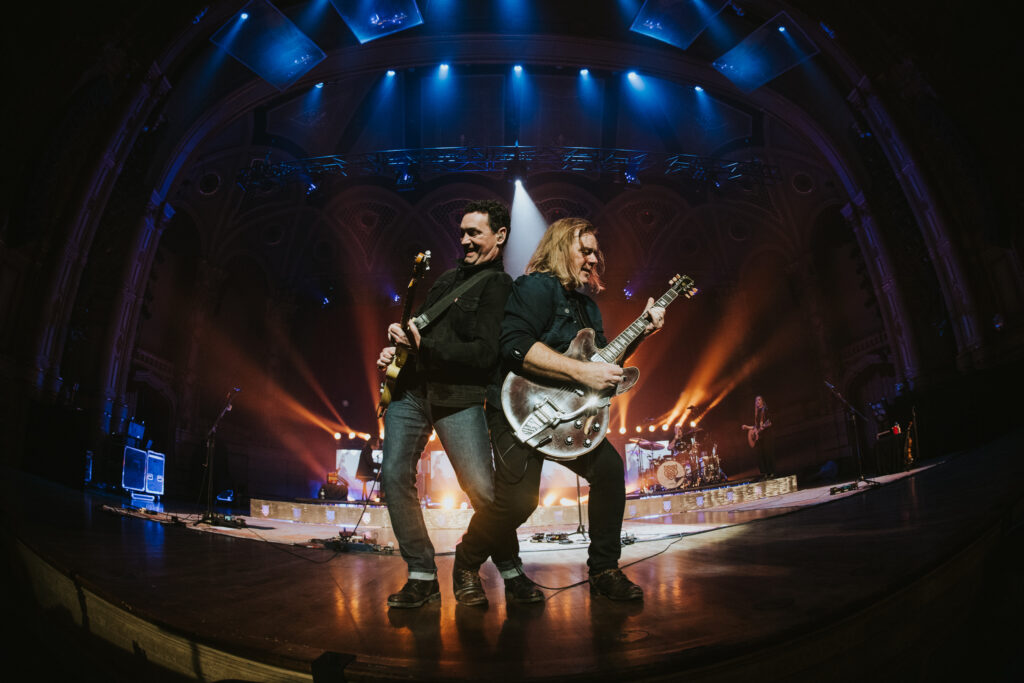
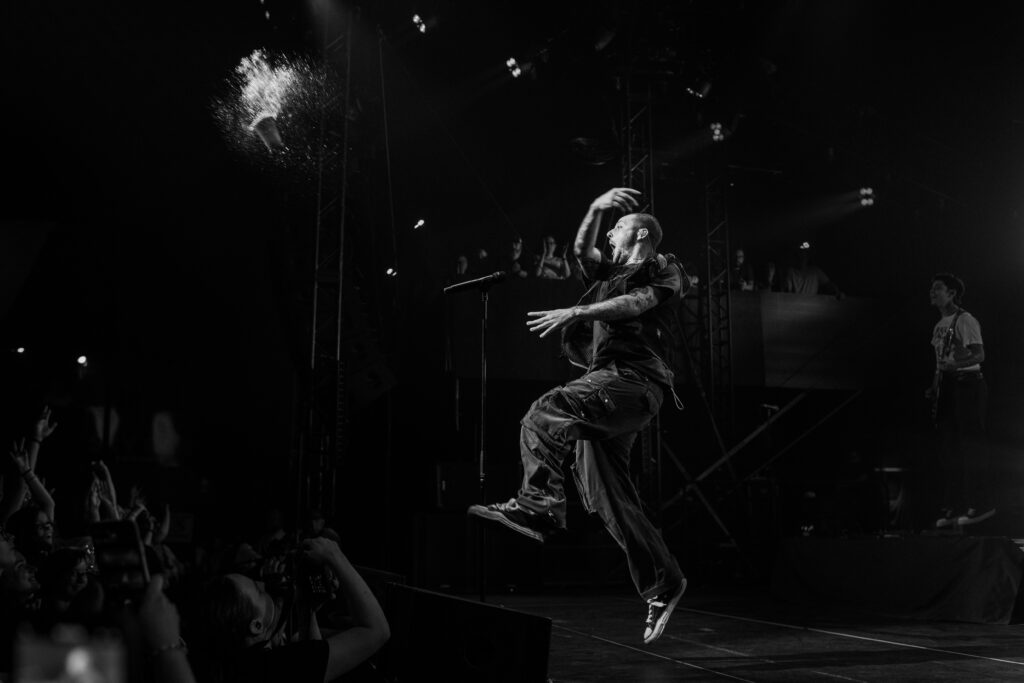
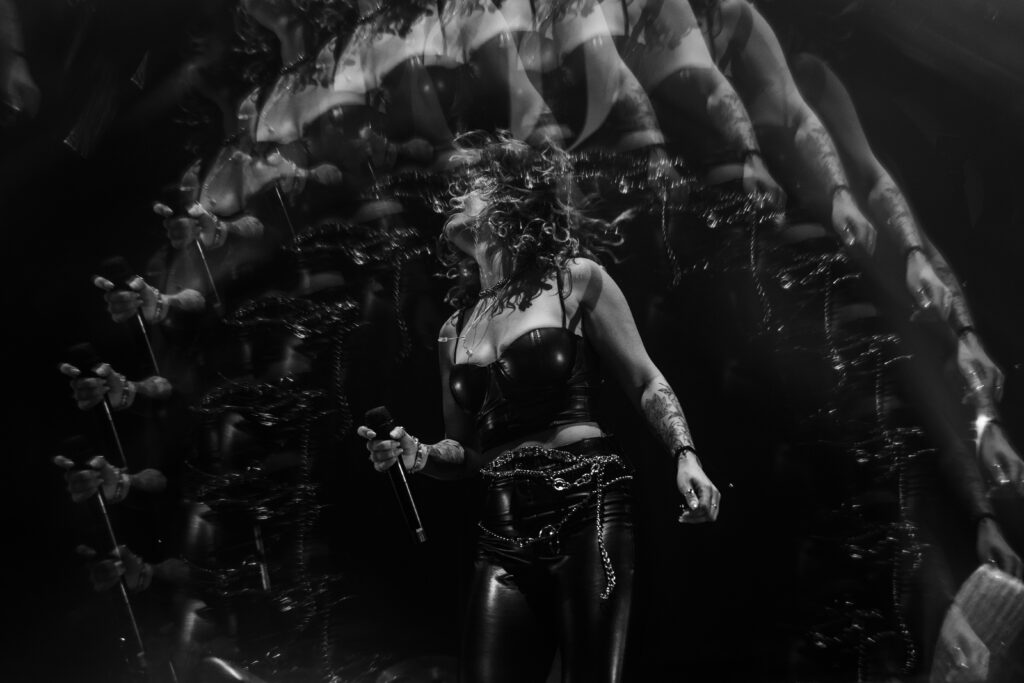
Walk through JAG Hotel and you’ll notice it right away – live music frozen in motion. From high-energy stage moments to quieter behind-the-scenes frames, photography plays a key role in shaping the atmosphere throughout the space.
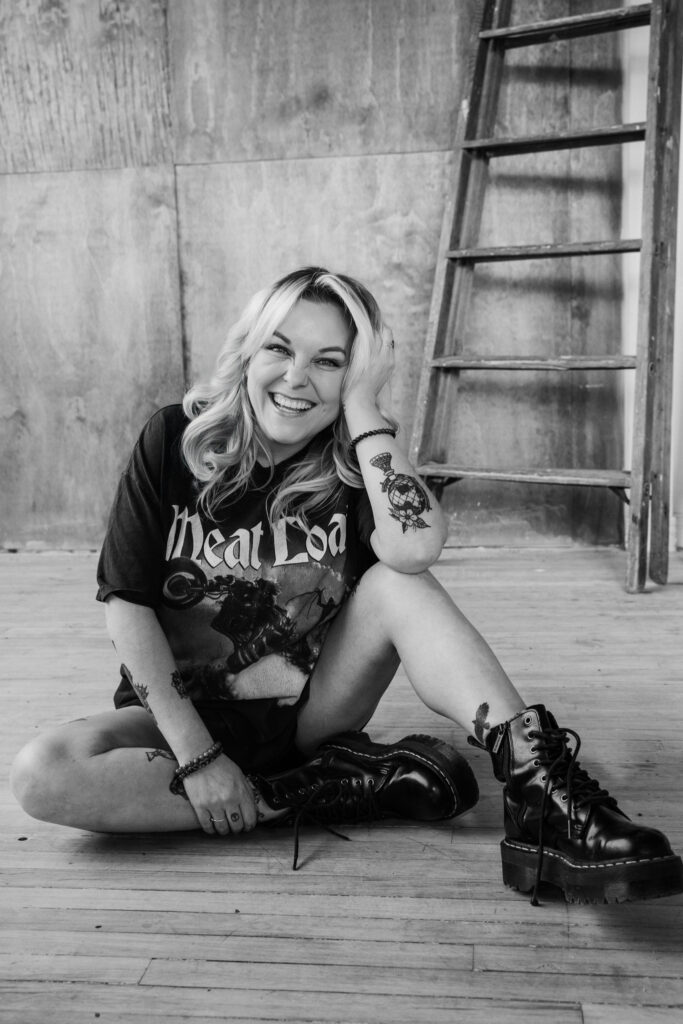
Among the featured work within the hotel is the photography of Newfoundland-born artist Sandra-Lee Layden, AKA The Front Row Lady. Recently named Visual Artist of the Year at the 2026 East Coast Music Awards, Sandra-Lee has built a reputation for capturing the raw energy, emotion, and intensity of live music through her lens. What started at small-town shows in Newfoundland has since taken her to major international stages, documenting unforgettable moments along the way.
We caught up with Sandra-Lee to talk about her journey, her creative process, and what it means to see her work featured at JAG.
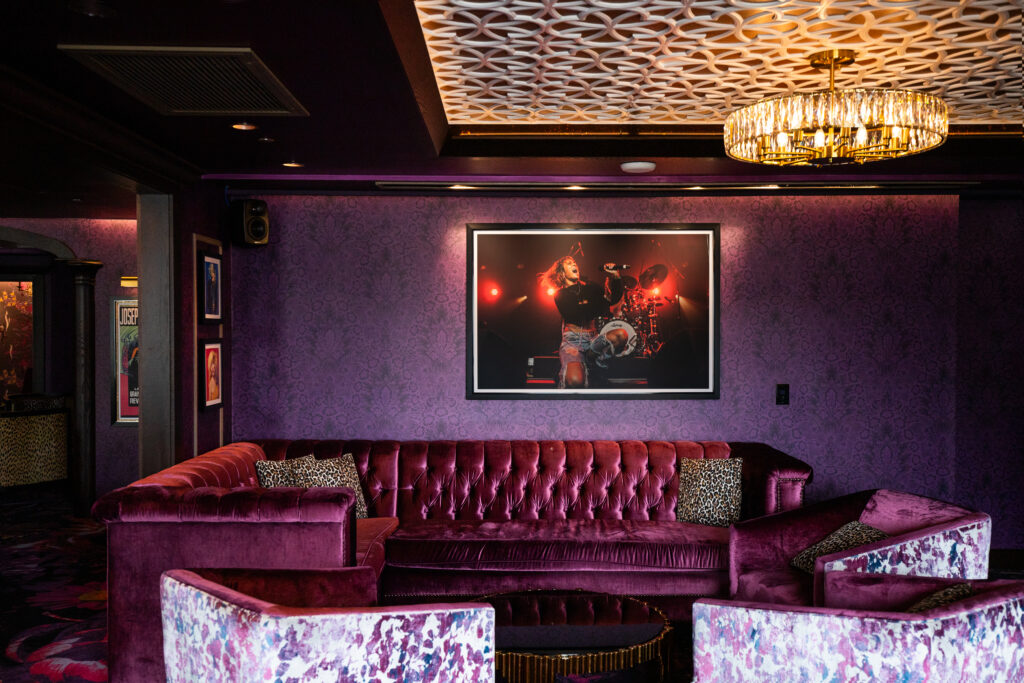
JJ Wilde – Sandra-Lee Layden Mojo Lounge, JAG Hotel
Roots in Newfoundland
Q: You’re originally from Newfoundland – how did growing up here influence your path into music photography?
Music has always been a huge part of my life. Growing up in a small town in Newfoundland (Dildo) it became my escape. We didn’t have a constant stream of bands coming through, so I lived off MuchMusic live performances and compilation albums.
We didn’t have cable, but we did have a Columbia House membership, so I studied album covers and liner notes like they were the bible. I remember flipping through the Woodstock ’94 booklets and being completely drawn in by the photography. It captured the same spirit I was hearing in the music. I was obsessed with how imagery could define a band’s identity, albums like Are You Experienced by Jimi Hendrix or Janis Joplin’s Greatest Hits and Pearl.
I’d buy music magazines, study the photography, tear out my favourite images and posters, and cover my walls with them. I was always daydreaming about being part of that world. Very ‘Almost Famous’ energy.
Eventually, I started bringing a small digital camera to local shows, sometimes borrowing gear from friends, and just shooting for fun. No one was really doing that at the time, so bands started noticing and asking for photos. It kind of grew naturally from there.
From Local Shows to a Full-Time Career
Q: Was there a turning point where you realized this could become your career?
It was more of a slow progression than a single moment. I started shooting weddings to keep the lights on, but I was taking every opportunity I could to shoot shows and concerts.
The shift really started when I began getting paid not just by local media, but directly by promoters and the bands themselves. That was the moment I realized this could actually become a full time career.
Losing one of my childhood best friends in 2017 was a turning point for me personally. It pushed me to take the risk and move to Toronto to give it a real shot. As much as I loved working in Newfoundland, the logistics of adding me to tours from there were difficult and expensive, and it was holding me back from taking that next step.
Moving opened the door to working with artists on a much larger scale and really committing to this path.
Q: Where did the name “The Front Row Lady” come from?
It’s actually the title of a song from a local band that I was mildly obsessed with and the first band that hired me pretty much for every single gig and press shoot, Queen’s Maid.
It’s about a girl in the front row that catches the lead singers eye, but I liked the thought that I was always front row with my camera and asked permission to kind to start branding myself as that.
Inside the Pit & Capturing the Moment
Q: What’s going through your mind when you’re in the pit shooting a live show?
It really depends on whether I’ve worked with the artist before and know their set. When I’m on tour, it’s usually a quick mental checklist – what content I need to get, what I captured the night before, and how I can switch it up. I’ll run through the setlist in my head, thinking about where I need to be for certain songs and moments.
I’m also very aware of the fans. I try not to get in their way – if I need to step in front, I do it quickly and usually give a quick “I’ll be fast” or a nod. Being short actually works in my favour in the pit, and I tend to crouch when moving through the crowd… unless I’m about to miss something, then it’s just “go” and I dart for it.
At the same time, my brain is firing off nonstop: “Is it in focus? Is he about to jump? Do I need to adjust my shutter? Oh, they’re going to solo together. Why is the bass player in the dark? I’m going to have to push my ISO.”
If it’s a one-off show or I don’t know the set as well, I start by getting solid establishing shots of each band member. Then I scan the lighting – looking for patterns, shadows, movement – anything that feels unique. I figure out which side the lead singer favours so I can get clean angles, and I’m always looking for ways to get to the drummer or access different parts of the stage.
Honestly, my brain is everywhere – and that’s why I love it. It’s a rush. I’m trying to capture what it feels like to be there, almost like the fans are seeing it through their own eyes. I shoot close, wide, and in the moment – chasing that adrenaline and the energy each band member brings to the stage.
Q: How do you anticipate moments in such a fast-moving environment?
Honestly, I’ve started to pick up on little tells. If a song starts to build, if the singer shifts their stance slightly, steps onto a riser, or if the bass player starts moving toward the drummer, those are all cues that something’s about to happen.
It’s a lot easier when I’m touring with a band, because even if things change night to night, I start to learn their patterns and personalities. Over time it becomes almost instinctual, like a second sense, where I just know a moment is coming before it actually happens.
In a fast moving environment like that, you’re constantly reading the energy, not just reacting to it. It’s intuition.
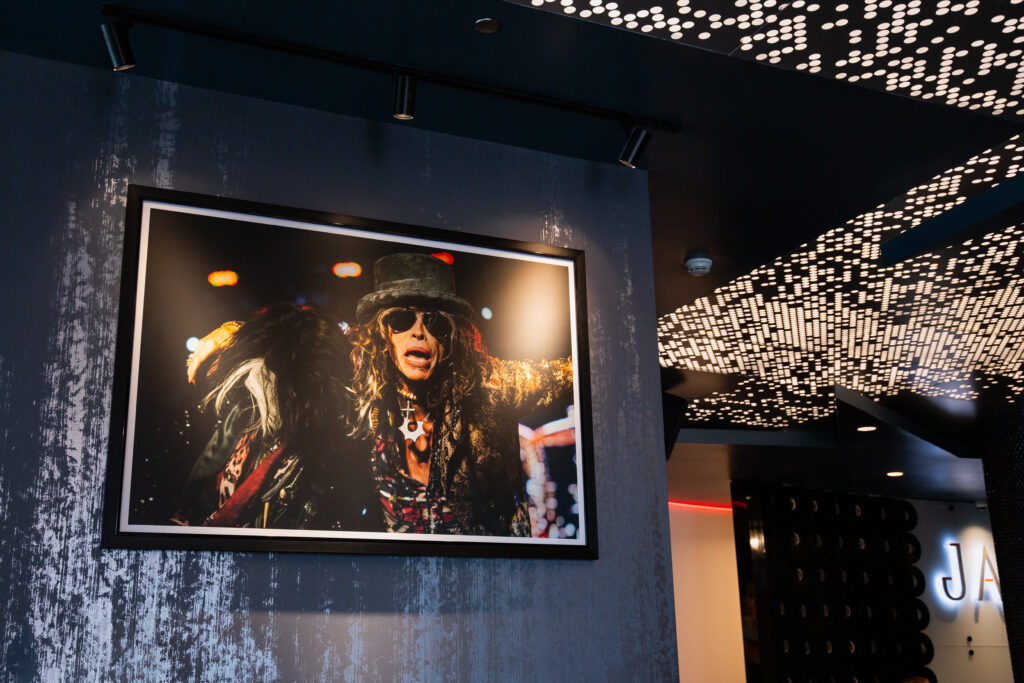
Steven Tyler – Sandra-Lee Layden 1st Floor Lobby, JAG Hotel
Q: You capture both high-energy and intimate moments—how do you shift your approach?
Intimate moments require a lot more awareness and intention. I’m always hyper aware of my surroundings, not wanting to trip on cables, hit gear, or get in anyone’s space, but in those moments it goes even further.
Everything slows down. My movement is more controlled, and I’m more deliberate with each shot. I’m thinking about composition, emotion, and not disrupting what’s happening.
With high-energy performances, it’s more reactive and fast. You’re chasing moments. But with intimate ones, you’re almost stepping back and letting the moment come to you.
Q: How do you know when you’ve got the shot?
Sometimes you just know. The big jumps, the screams, the crowd interactions, those moments hit and you can feel it. I’ll quickly check focus on the camera and sometimes I’ll even let out a little yelp because I know I got it.
Other times, you don’t realize it until later, when you’re sitting down and culling through thousands of photos and something just jumps out at you.
There are also those very specific moments you can call in real time. Like when Steven Tyler screamed in my face, “Take my f**king picture, baby,” I knew that was going to be the shot. Or The Glorious Sons frontman Brett Emmons throwing a mic stand my way, or shaking the rain out of his hair in the middle of a storm. Those moments don’t happen twice, and when they do, you feel it instantly.
Artists, Touring & Life on the Road
Q: You’ve worked with some incredible artists—who are a few you’ve captured?
I’ve been so grateful to work with incredible artists through the years, from my days working on the Much Music Video Awards digital team, to festival media teams, to touring across the world along side them.
Through Much, I’ve photographed: Lady Gaga, Lorde, Drake, Justin Bieber, Katy Perry, Miley Cyrus, Imagine Dragons, Halsey, Bebe Rexha, The Jonas Brothers, The Weekend, Ed Sheeran and so so many more.
Artists I’ve worked with/captured include: The Glorious Sons, Protest the Hero, Alan Doyle, JJ Wilde, The Trews, Adam Baldwin, James Barker Band, Barenaked Ladies, Death From Above 1979, July Talk, Billy Raffoul, Lights, The East Pointers, Brother Elsey, Tim Baker, Silverstein, Billy Talent, Alexisonfire, Fall Out Boy, Metric, Def Leppard, Gwen Stefani and honestly hundreds more.
Q: Are there any artists or projects still on your bucket list?
Absolutely.
I’d love to tour with Noah Kahan. His music moves me in a way not many artists have, and his openness about his struggles is incredibly inspiring. His live shows feel fun, emotional, and honest all at once, which is exactly the kind of environment I love to capture.
John Mayer has also been on my list for over a decade. There’s something about the way he blends musicianship and performance that I’ve always wanted to photograph up close.
And The 1975. Their shows are so intentional and theatrical, with beautifully designed sets that feel like a full visual experience, which as a photographer is incredibly exciting.
Jakob Dylan – Sandra-Lee Layden 1st Floor Lobby, JAG Hotel
Q: What’s something people would be surprised to learn about touring with artists?
It’s not as luxurious as people think. A lot of it is hotel parking lots. You can tour the world and still see very little of it unless you get a day off, and even then you might be stuck somewhere like Salina, Kansas.
You end up seeing more of buses, vans, and green rooms than actual cities. You eat an unhealthy amount of gas station sandwiches, you’re constantly trying to find a washroom in the morning before venue access, no number two’s on the bus, and there’s a serious lack of sleep.
It’s not glamorous, but it’s real, and that’s part of it.
Q: Do you have a routine on show days, or is every day completely different?
Every day is generally the same on tour, the routine keeps me sane! These timings change with each tour but it’s my days usually look like this:
8/9:00am – Wake up and catch up on emails, put the final touches on photos from the night before and upload them to the folder for the city.
10:00am – Get a post up from the night before. I usually run the social media for the bands I tour with, so I grab a caption from the artist and make sure they’re cool with the photos I want to post. This is followed by doing a quick video recap if that’s what the artist wants.
11:00am – (THE MOST IMPORTANT PART) I try to go for a walk every day to find a postcard to send to my niece and grab a nice healthy vegan snack. Some tours this isn’t possible with my work load (If I’m helping with merch or if there is a LOT of content to deliver). It helps with my mental health and gives me a coles notes tour of the city.
1-2:00pm – Return to the venue and prep my gear for the night. Start charging batteries, cleaning lenses, catch up on social media.
3-5:00pm – Sound Check
5:00-7:00pm – Supper; whether it’s catering, ordering in (if I have more editing to do) or going out.
7:00pm – Doors – I try to get fans coming in, their excitement, line ups, and shots of the venue with the bands name on the outside.
7:30-9:00pm – BTS of the band chilling. Generally before the show it’s pretty chill, a few drinks, snacks and warming up to go on stage.
9:00-11:00pm – SHOW TIME BABY!
11:05pm – I dump my memory cards onto my computer and capture post-show behind the scenes.
12:00am – head to the bus/hotel to drop my gear and depending on the night either grab a night cap or start culling photos immediately.
2:00am – photos culled, selects chosen for the next morning. BED.
Music, Meaning & The Newfoundland Scene
Q: What does live music mean to you beyond the camera?
Live music, for me, goes way beyond the camera. It’s one of the only places my brain actually quiets down. Everything slows, or maybe it just makes more sense for a minute. All the noise in my head gets replaced by something real and immediate.
Music has been integral to my growth. Every memory I have is coated in it. I can’t even start the car without something playing through the speakers. It’s shaped how I process the world, how I feel things, and how I connect to people.
It’s an escape, but not in a way that avoids things. It helps me understand them. There have been so many moments where a lyric or a performance puts words to something I’ve felt but could never explain. It fills in the gaps emotionally.
It’s also given me everything. My best friends, my core memories, the ability to travel the world, all of it has come from music in some way. It’s built my life.
And then there’s the live experience itself. Being in a room where everyone is feeling something at the exact same time, whether it’s joy, heartbreak, nostalgia, or just pure release, there’s nothing else like it. That shared energy is powerful.
The camera is just how I hold onto those moments. It’s how I translate that feeling for someone else. But at the core of it, it’s about being there, feeling it fully, and being part of something bigger than yourself.
Q: From your perspective, what makes a live show unforgettable?
From my perspective, it’s the feeling. You can have the biggest production in the world, perfect lighting, flawless sound, but if it doesn’t make people feel something, it won’t stick.
What makes a show unforgettable is when there’s a real connection between the artist and the audience. When it stops feeling like a performance and starts feeling like something shared. You can feel when a room locks in together, when the band is fully present and the crowd is right there with them.
It’s also in the unplanned moments. When something goes a little off script, when an artist reacts in real time, when the crowd takes over a lyric, or when there’s a moment of vulnerability that wasn’t rehearsed. Those are the things people carry with them.
Energy plays a huge role too. It doesn’t have to be loud or chaotic, it can be quiet and emotional, but it has to be honest. The best shows feel lived in, not performed.
For me, the most unforgettable shows are the ones where you leave feeling different than when you walked in, like you were part of something, not just watching it.
Q: You also do a lot of work beyond photography to support artists and the industry – howwould you describe the Newfoundland music scene today?
I appreciate that. I work alongside Jay Emmons of The Glorious Sons, and together we run a boutique, multi service music company focused on artist strategy and development –745 Music.
The Newfoundland music scene is thriving in a lot of ways. There’s an incredible amount of talent, and it’s one of the few places where musicians can genuinely make a living. That said, it often comes at the cost of playing six nights a week, which isn’t easy.
I do feel like something has shifted when it comes to smaller, local shows. Growing up, we would pile into cars and drive from town to town, whether it was Shearstown, Carbonear, or into St. John’s, just to catch an all ages show. It felt constant. There was always somewhere to go, and those shows really shaped the community. I also really miss seeing light poles covered in handmade posters, stacked with four or five bands on a bill. There was something about that that made the scene feel alive and tangible.
When I moved to the city, it was the same thing. Bars weren’t just running house bands, they were putting on full shows every weekend, and they were packed.
I love that there are still spaces supporting local artists, especially places like the JAG, and that bars continue to give emerging musicians a platform. I just wish we could bring back more of those smaller, all ages shows across genres like acoustic, folk, punk, metal, and rock. That grassroots energy is what builds scenes and keeps them alive.
Seeing the Work at JAG
Q: How does it feel seeing your work featured at JAG Hotel?
Honestly, it’s surreal. The first time I saw my work in there, the imposter syndrome was very real. I burst into tears, much to the amusement of John Steele.
The support from John and the team has meant so much. From hosting a small gallery show to now having my photos hanging four feet wide in the main lobby, it still kind of blows my mind.
I’m really honoured to be part of that space.
Q: What do you hope guests feel when they see your work?
I hope they feel something real.
Whether it’s energy, nostalgia, excitement, or even just curiosity, I want the photos to pull them in for a second and make them stop. Live music is such a feeling driven experience, and I hope that translates through the images.
I want it to feel immersive, like they’re not just looking at a photo, but like they’re right there in the moment. Close to the stage, in the crowd, feeling that same energy.
More than anything, I hope it sparks a connection. Whether that’s to a memory, a song, or just the feeling of being part of something bigger.
Q: Do you think photography changes how people experience a space like a hotel?
Absolutely.
Photography has the ability to completely shape how a space feels. In a place like a hotel, it can turn something that might otherwise feel purely functional into something immersive and memorable.
There’s really nowhere like the JAG in Canada, let alone in Newfoundland. It has an energy that reminds me of the Morrison Hotel Gallery, where music and photography aren’t just decoration, they’re part of the identity of the space. It feels alive.
Images bring energy, story, and identity into a space. They can reflect the culture of where you are, highlight moments people wouldn’t otherwise see, and create an emotional connection that goes beyond just staying in a room.
I also think it has the potential to grow into something even bigger. It would be incredible to see it become a place where people can actually buy memorable rock and roll photography and music, something they can take home that connects them back to that experience.
It changes how people move through a space too. If something catches your eye, you slow down, you take it in, you engage with it. It creates small moments within the environment.
At its best, photography gives a space personality. It makes it feel lived in, intentional, and connected to something bigger than just the building itself.
From small-town Newfoundland beginnings to international stages, Sandra-Lee Layden’s journey has been shaped by instinct, timing, and a deep connection to music.
Through The Front Row Lady, she captures more than performances – she captures what it feels like to be there.
Within JAG Hotel, that perspective becomes part of the space itself – reminding guests that live music doesn’t just happen on stage.